Memoir of
John Hunter
Comparative Anatomy
1728–1793
Originally published in volume 12, Ruminantia, Part II, Goats, Sheep, Wild and Domestic Cattle, &c..
The subject of the following memoir, though universally ranked among the most illustrious individuals whose names adorn the close of the last century, has perhaps been chiefly known by his proficiency in anatomy and surgery.
That he is fully-entitled to the highest celebrity in both these departments, it is impossible to dispute; but we may, at the same time, confidently affirm, that, could his own voice have been heard, he never would have consented to rest his fame on any narrower basis than that afforded by his indefatigable labours, and his brilliant achievements in the wide field of natural science.
It is not difficult to account for the partial notions often entertained respecting Mr Hunter’s scientific character. It was as an anatomist he began his bright career; and, long before its close, he had acquired a popularity as a surgeon which had never before been equalled, and has never since been sin passed. The study of anatomy and physiology, however, only served to conduct his inquiring mind into the boundless regions of Nature’s wonders, to the examination of which he devoted himself with undeviating enthusiasm; so that every thing that lived, from man himself, down to the blade on which he treads, and the insect which it nourishes, became in its turn the subject of his penetrating scrutiny. Human speedily led to comparative anatomy, and this latter merged in the study of all animated nature. Mr Hunter, however, was not born to an independent fortune; and the entanglements and responsibilities of his profession necessarily encroached upon his scientific labours. Nevertheless, even his profession was made subservient to the aspirings of his genius; and out of its honourable gains, he proceeded gradually to rear his own most lasting monument, in a Museum, which, though known to the public only in connection with a professional body (the London Royal College of Surgeons), has yet realized the splendid design of its founder, by forming, in no small measure, a concentration of the natural history of the world.
Another circumstance, which has materially contributed to stamp Mr Hunter’s celebrity with that limited and professional character to which we have alluded, is, that his life has been written only by his professional brethren, men who naturally considered it their main object to supply that species of information which would be most highly valued by that learned body of which Mr Hunter formed so distinguished an ornament. One of these biographies proceeded from the pen of a near relation, the late Sir Everard Home; another is written by an individual whose chief celebrity appears to have arisen from his being the opponent, and, to the extent of his ability, the persecutor of Mr Hunter; the third is the production of a pupil and friend, Dr Joseph Adams, a name well known in the annals of medicine. From these sources we have drawn liberally in the following pages; but, at the same time, we must be allowed to add, that the life of John Hunter is still a decided desideratum. In what follows, we have endeavoured to reduce the merely professional features of his character to their just proportions; and we trust that the following sketch will be found by the naturalist to be at once interesting and instructive.
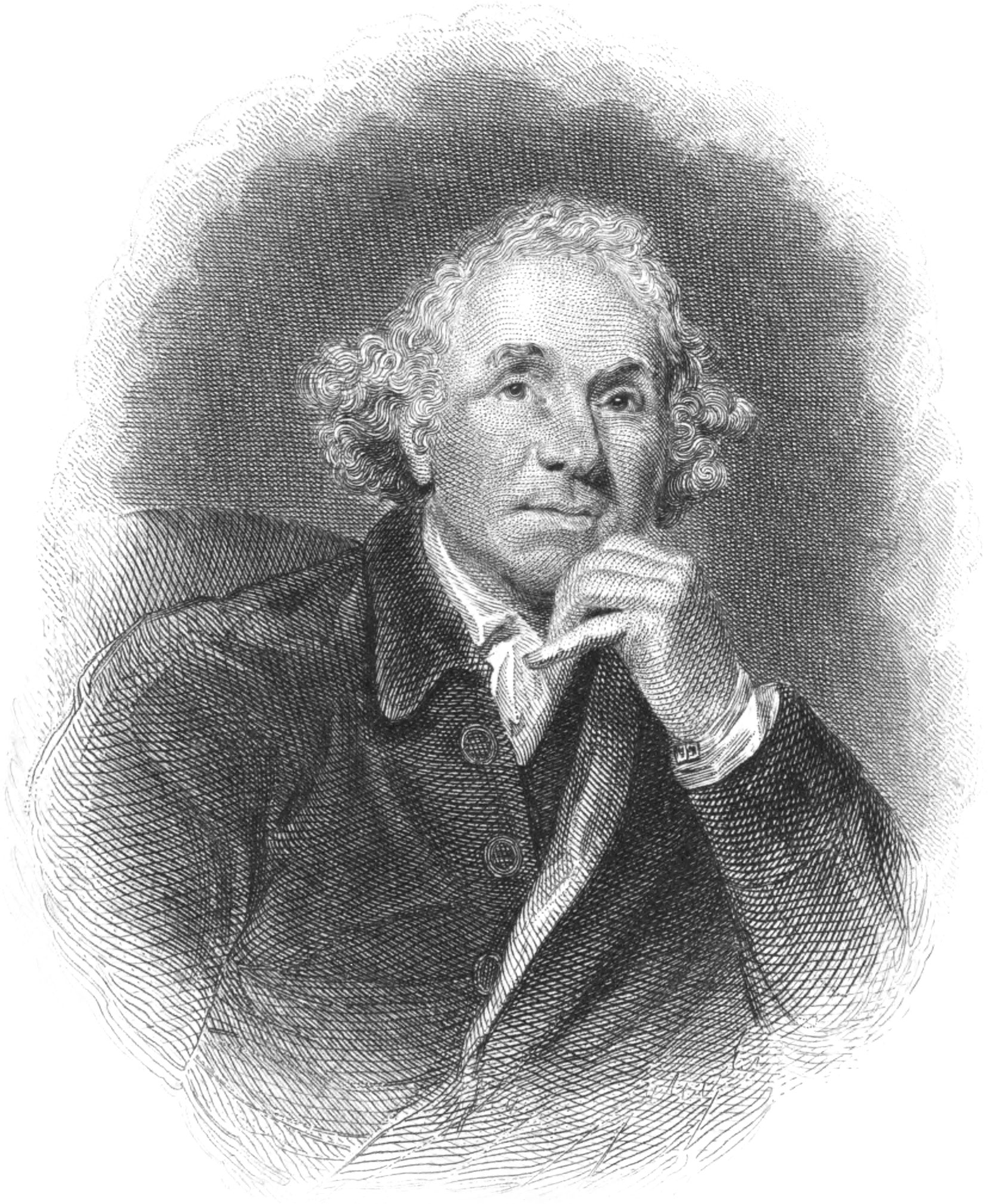
We shall only further observe, that the portrait at the commencement of this volume, is a faithful copy of Sharp’s celebrated and now scarce engraving of Sir Joshua Reynolds’ picture. It is recorded, that when these lineaments of Mr Hunter’s interesting countenance were shown to Lavater, he observed, “That man thinks for himself,”—a remark of the justness of which the following pages will afford abundant evidence.
John Hunter was the son of John and Agnes Hunter of Kilbride (Easter), in the county of Lanark. His father was descended from Hunter or Hunterston, an old family in Ayrshire, and his mother was a daughter of Mr Paul, a respectable citizen of Glasgow, and treasurer of the burgh.
He was born at Long Calderwood, a small estate belonging to the family, on the 13th–14th February 1728. Sir E. Home states his birth, by mistake, on the 14th July. But the parish-register bears the 13th February, and on the 14th of that month, the Royal College of Surgeons of London celebrates the anniversary of the birth of this distinguished individual.
John was the youngest of ten children, five of whom died in infancy. James, the eldest of the brothers who attained to manhood, was born in 1715. After prosecuting the legal profession in Edinburgh for some time, he, in the year 1742, visited his brother William, then a teacher of anatomy in London; and so much was he captivated by this pursuit, that he resolved to abandon his profession, and devote himself to medicine. His success promised to rival that of either of his brothers; but his health unfortunately gave way, and he died of a pulmonary complaint in the 28th year of his age.
The next brother, William, born in 1718, early rose to unrivalled distinction as a teacher of anatomy in London, attained a professional reputation which could not be exceeded, and a celebrity second only to that of his brother John. By unwearied industry, and at vast expense, he formed the museum which immortalizes his name, and which, by his liberality, now enriches the University of Glasgow. It was under the fostering care of this elder brother that John was initiated into those pursuits in which he soon became the rival of his instructor.
Of the daughters of the family, Janet married Mr Buchanan of Glasgow, of whom more presently; and the younger married Dr James Baillie, Professor of Divinity in the University of Glasgow, from whom descended the illustrious Dr Matthew Baillie, and the not less distinguished Mrs Joanna Baillie.
The subject of this memoir was born when his father had nearly reached his 70th year. Hence we cannot be surprised to learn, that he at no time received the benefit of paternal restraint. At the age of ten, he lost his father, and was then left under the sole direction of his mother, who proved too indulgent to her youngest child. At the parish school, his studies were neglected, and the greater part of his time was spent in amusements. His early education was thus extremely imperfect; and hence arose many deficiencies, distinct proofs of which, most painful to himself, were not wanting in his subsequent history.
When he had attained the age of seventeen, a period at which it was high time to engage in some regular employment, he went to Glasgow on a visit to his brother-in-law Mr Buchanan. The object of this visit has been variously represented. Mr Buchanan had lately returned from London, to settle in Glasgo was a cabinet-maker and carpenter. He was a man possessed of many agreeable qualities, and having won the heart of Miss J. Hunter, she, contrary to the wishes and advice of her relations, consented to become his wife. The marriage proved unfortunate. Buchanan got into company, and neglected his business, which of course became involved. According to one representation, Mr Hunter removed in these circumstances to Glasgow, to comfort his sister, and to assist in extricating her husband’s affairs; but, according to another account, his object was to associate himself in the business, and prosecute the trade It is obvious, however, that these two objects are in no way incompatible; and it would be false shame to throw a veil over the transaction. If probabilities and local tradition maybe depended upon, there appears little doubt that John worked at his brother-in-law’s trade for some time; but matters do not seem to have benefited by his interference, and eventually he returned to Long-Calderwood.
How far John Hunter was chagrined by this failure, or what influence it may have had on his future character, we have no means of determining. Up to this period, however, it is apparent, that his powerful mind had found nothing to arouse its energies. The drudgery of grammar, and of a mechanical trade, had proved alike uncongenial; and, though wayward in his temper, and too little schooled by discipline or art, it is not to be doubted that his active mind was spontaneously exercised in some manner which tended to strengthen its faculties, and enabled him to maintain through life an individuality of character, and an independency of thought, which have rarely been surpassed.
Having returned home in the summer of 1748, and finding nothing there upon which to employ his energies, John Hunter addressed himself to his brother William, requesting permission to visit him in London, and making an offer, at the same time, to assist him in his anatomical employments. In answer to his letter, he received a very kind invitation from his brother, and immediately joined him.
Mr Hunter arrived in London in the month of September, about a fortnight before the commencement of his brother’s course of lectures. Dr Hunter immediately introduced him into the dissecting-room, where his first essays were so promising, that Dr Hunter did not hesitate to pronounce that his brother would make a good anatomist, and that he should not want employment. Under the instructions of Dr Hunter, and his assistant Mr Symonds, he now enjoyed every opportunity of improvement, all the practical anatomy at this time carried on in London being confined to this single school.
In the following summer, the celebrated Cheselden, at the request of Dr Hunter, permitted John to attend Chelsea Hospital; and here he was initiated into the first rudiments of surgery.
In the succeeding winter, Mr Hunter was so far advanced as to become Demonstrator of Anatomy, assisting and directing the pupils in the dissecting-rooms, while his brother confined his attention almost entirely to the regular lectures in the classroom. The assiduous discharge of the most laborious duties of this situation, gave him full employment during the winter 1749–50.
During the summer, Mr Hunter resumed his attendance at the hospital at Chelsea; and in 1751, he became a pupil at St Bartholomew’s Hospital, of which Mr Pott was then the distinguished ornament. During the winter months, his more pressing avocations must have confined him in a great measure to his brother’s premises, though he always endeavoured to be present at the hospital when any thing occurred of more than ordinary interest.
In 1753, he entered gentleman commoner at St Margaret’s Hall, Oxford, for what specific object does not very clearly appear. We do not learn that he passed any of his time at the University: and the constant routine of his London employments was not for a moment interrupted.
In 1754 he became surgeon’s pupil at St George’s Hospital, where he attended during the summer; and two years later, he discharged the duties of house-surgeon for a period of five months.
In the year 1755, after John had acted as his assistant for five years, Dr Hunter admitted him into a partnership in his lectures. A certain portion of the course was allotted to him, and he was expected to supply the Doctor’s place, when professional engagements prevented his personal attendance. This proved a most irksome task to John. Anatomical lectures, to be rendered interesting, must he delivered extempore—a style of lecturing in which Dr Hunter had attained the highest possible excellence; but, unfortunately few men were less qualified than John to be placed in competition with his brother, in this exercise of talent.
Making anatomical preparations were at this time a new art, and very little understood. Every skilful preparation, therefore, became an object of admiration; and as many of them were required for the use of the lectures, and Dr Hunter had himself an enthusiasm for the art, he left no means untried to infuse into his brother a love for his favourite pursuit. How well he succeeded, the collection afterwards made by Mr Hunter will sufficiently evince.
We thus, at length, find Mr Hunter placed in a situation which was in every respect adapted to his talents and his tastes, and where he was surrounded with every advantage calculated to stimulate and direct the application of his energies.
The late Sir Everard Home remarks, that anatomy seems to have been a pursuit for which Mr Hunter’s mind was peculiarly fitted; and he applied to it with a perseverance of which there is hardly any example. He laboured for ten years in this branch of science, during which period he not only became acquainted with what was already known, but made considerable additions to that knowledge. Some oi his discoveries called forth the highest commendations of Baron Halier, then considered the first physiologist in Europe, and still command admiration to the present day.
It would he out of place to enter into details of these anatomical and purely professional investigations. They were regularly expounded in the lectures of Dr William Hunter for a succession of years, and some of them were published in his Medical Commentaries. Further information regarding them may be found in Dr Simmon’s Life of Dr Hunter, to which we refer those who are interested in such subjects. The same observation applies to Mr Hunter’s labours in the department of surgery, which, though of the highest merit, are of such a nature as to preclude their being introduced to the notice of any but the professional reader. As we have already hinted, however, Mr Hunter’s labours were not confined to professional investigations. He soon discovered that human anatomy presented too narrow a field for his ardent research. Many parts of the human frame being so complex that their structure and uses had hitherto baffled inquiry, he was led to examine similar parts in other animals, where the structure was more simple, and more within the reach of observation. Hence he was conducted not only to comparative anatomy, but to the whole science of zoology, which thenceforward became the favourite pursuit of his life. Even at this early stage of his career, we find him laying the foundation of that Museum of Comparative Anatomy, the progress of which was altogether unexampled, and the labours connected with which justly place his scientific even above his professional reputation.
In this new line of pursuit, Mr Hunter commenced by investigating the structure of the more common animals, and making preparations of such parts as appeared, by analogy or otherwise, to throw light upon the animal economy. It was not his intention to make dissections of the whole of these animals, but to institute an inquiry into the various organizations by which the functions of life are performed, and thus attain to a knowledge of general principles. The design was nearly as original as it was great, for little, if any thing of the kind, had hitherto been accomplished.
It was at this time Mr Hunter detected the existence of lymphatic vessels in birds. He also traced further than had previously been done, the ramifications of the olfactory nerves, and discovered the course of some of the branches of the fifth pair of nerves—those nerves, a minute attention to the functions of which is even now leading to some of the most interesting discoveries of modern times. His observations on the latter of these subjects were made in the summer of 1754; and in them he had the assistance of Dr Smith, then a student in London, afterwards Savilian Professor of Geometry, and Lecturer on Physiology at Oxford. Short notices regarding their labours were published in 1786, in a treatise entitled, “Observations on certain parts of the Animal Economy;” but these notices were taken from the description prepared by Dr Smith in 1754.
In 1755 or 1756, Mr Hunter made preparations and drawings of the growth of the chick, in the process of incubation. His extensive series of experiments and observations connected with this subject have never, so far as we know, been permitted to see the light; but we find him making some use of them in illustration of another subject, to which he applied all the energies of his mind; and they may be seen noticed in his well known work “On the Blood,” &c.
So eagerly did Mr Hunter at this time attach himself to the study of comparative anatomy, that he left no means unemployed to obtain possession of the rarer kinds of animals, with the view of examining into their peculiarities. For this end, he applied to those who had the charge of the Royal Menagerie at the Tower, for the bodies of the animals; that died there and he made similar applications to all those who made a business of collecting and exhibiting wild beasts to the public. He also purchased any of the rarer animals which came in his way; and these, with such others as were presented to him by his friends, he entrusted to the showmen, to keep till they died, the more to encourage them to assist him in his labours.
After twelve years had been spent in the manner which we have described, Mr Hunter, in the very midst of his career, suddenly left London. It must have been some very violent cause which could thus tear him from his favourite pursuits, and from the only scene in which they could be advantageously prosecuted. The cause is by no means a secret; and in explaining it, while we are required to expose the infirmities of two distinguished men, and the dissensions of two near relations, let us not fail to observe, how that as both were probably more or less to blame, so both suffered the penalty of their ungenerous conduct, in the embittered feelings which they carried with them to the grave.
Had William and John Hunter allowed just scope to their fraternal feelings, they might have added not only to their common success, but incalculably to their mutual happiness. Unfortunately, they were both equally ambitious, and both equally jealous of fame. Their proximity, arid the identity of their pursuits, thus became a source of dissension; and the success of the one was apt to be regarded as an encroachment by the other.
It has been remarked, that Dr William Hunter was one of those fortunate men who are placed early in life exactly in the situation for which Nature and education designed them. He had a solid understanding, a correct eye, and an innate love of order, which evinced itself in every part of his conduct, and a perseverance which could only have been supported by a genuine love of his occupation, and the success which crowned his labours. His classical acquire merits were of a superior order. These, with his native endowments, gave him a facility of expression, and a most happy choice of words, joined to a talent for demonstration never to be exceeded. Whether from an originally correct ear, a refined taste, or the early society in which he mingled, his dialect had all the polish of the southern metropolis, with enough of the northern accent to strike and yet to please. His person, though small, was graceful—his cast of features regular and interesting—his voice musical—his manners attentive and flattering. In short, Dr Hunter was a polite scholar, an accomplished gentleman, a complete anatomist, and probably the most perfect demonstrator, as well as lecturer, the world had ever seen.
When his younger brother arrived in London, Dr Hunter entered upon the delightful task of instructing a scholar every way worthy of him—diligent, orderly, inquisitive, and of quick apprehension it could not but add to his gratification that such a disciple was his near relation; and we can easily believe that their mutual satisfaction remained unbroken, so long as the elder might consider every discovery made under his eye, and in his premises, as his own property. But the relative position of the parties could not always continue to answer this description. The scholar became the equal, if not the superior, of his instructor; and as often as he ventured to offer a well-founded opinion in contradiction to, or even in anticipation of, his master, a trial of temper must have ensued—a trial which the event too clearly shewed the character of the brothers did not qualify either of them to sustain.
Both the brothers were in the habit of committing their views to writing, even when they did not intend to give them an immediate publicity; and thus in their works, when at length published, we sometimes find a record of feelings of an early date, which, though not expressed to each other at the time, nevertheless operated on their mutual conduct. Thus, Mr John Hunter informs us, that, after making those investigations on the nerves of smelling to which we have already alluded, he immediately had drawings taken, with the view of presenting the account to the Royal Society; but other pursuits interposed. Of these very drawings, however, we find that engravings were afterwards made by Dr William Hunter; and they, and the preparations themselves, were repeatedly displayed in his lectures, while he at the same time explained to the students the inferences to be deduced from the discovery;—in other words, Dr Hunter appropriated to himself the merits of a physical discovery, and the physiological views thence derivable, all of which was properly due to his brother.
This, however, was by no means a solitary instance; and the particulars of another maybe alluded to, as clearly exhibiting the nature of the offence, and the cause of the umbrage. In the month of May 1754, Dr Mackenzie, a friend of Mr Hunter’s, had been particularly fortunate in procuring an interesting portion of anatomical structure, and so struck was he with its value, that, before touching it, he secured Mr Hunter’s attendance, and requested him to conduct the examination. This Mr Hunter accordingly did, in the presence of several individuals, and, with his usual address, succeeded in unravelling a structure, the anatomy of which had not before been understood. He immediately made some preparations illustrative of the facts, returned home in the evening, and communicated what he had discovered to Dr Hunter, who at first (says he)
treated it and me with good-humoured raillery; but on going to Dr Mackenzie’s with me, he was soon convinced of the fact.
After this, he and Dr Hunter together took opportunities of re-examining the point, which was thus made out to the complete satisfaction of all capable of judging. John’s feeling, in his own words, was, that he had a just claim to the discovery of the structure, together with the further merit of showing the purposes of the structure so discovered. But, notwithstanding this, Dr Hunter in his lectures never took any notice of his brother’s share in the investigation, and some years afterwards published a very splendid and elaborate work, in which he accurately delineated and minutely described the anatomy and physiology of the parts, without once mentioning the author, or the mode, of the discovery.
These two instances may suffice to shew the nature of that injury which was offered on the one side, and the cause of that offence which was felt on the other. The injustice beyond all question was great, and was the less excusable, as coming from one so nearly related, and who was himself already basking in the brightest sunshine of popularity and success. That offence should have been taken can scarcely excite either surprise or censure. But still it can never be sufficiently lamented that two such men should have allowed occurrences of this nature, which, with a little kindly feeling, might have been so easily adjusted to their mutual credit, to become a source of heart-burning and division. We have not the means of judging how far these awl similar occurrences were attended with personal altercation; but it is a melancholy fact, that the spark thus early kindled, occasionally burst into a flame, during the remaining years of their lives. Not that they lived in a state of uninterrupted hostility; very far from it, as we shall have ample occasion to observe in the sequel, and as the facts to which we have just been adverting themselves sufficiently evince For, although these painful events occurred where John had been only six years in London, he continued in connection with his brother for six years longer. In fact, John’s labours at this period contributed so much to his brother’s museum, and were altogether so gratifying to his disposition, that though, as Sir E. Home remarks, in many respects they did not agree, the powerful bond of interest, in conjunction, it may be hoped, with the remnants of better feelings, long delayed their separation.
It is not to be doubted, that the unfortunate state of mutual feeling existing between the brothers was the main cause which induced John, at length, to determine upon withdrawing from London for a season. At the same time, it is not less certain, that the state of his health, impaired by incessant application, rendered change of scene, and a suspension of labour expedient. We find, accordingly, that he was advised to go abroad; and Mr Adair, Inspector-General of Hospitals, having appointed him a surgeon on the staff, he, in the following spring, accompanied the army to Belleisle, leaving Mr Hewson to assist his brother.
From these facts, we may conclude, that Mr Hunter’s indisposition was not of a very alarming character, as, had it been dangerous in its nature, he would probably have sought for milder skies, and, at all events, would not have encountered the perils and fatigues incident to active military service. The change, however, besides effectually breaking up his connection with his brother, must have no doubt tended to invigorate his constitution; while active service with the army, presented to him the best possible field in which to familiarize himself with the countless details of an art which can be practically learned only by personal experience. Of these advantages there is no want of evidence that he assiduously availed himself, both for his own improvement, and for the advancement of science.
On the 29th of March 1761, a secret expedition which had been some time in preparation, set sail from Spithead, and shaping its course for the coast of Brittany, reached Belleisle on the 6th of April. The land forces under Major-General Hodgson amounted to about 10,000 men, and the squadron under the command of Commodore Keppel, consisted of ten sail of the line, and sixteen frigates, and smaller vessels. An unsuccessful attempt to effect a landing was made on the 8th, when the troops were repulsed with the loss of 500 men, killed, wounded, and prisoners; but another and more fortunate attempt was made on the 22d. As no pains had been spared to put the island into the best state of defence, under the command of the Chevalier St Croix, one of the best officers of the French army, it was not till after much skirmishing, and the capture of several forts, that it finally surrendered on the 8th of June. In the interval between the landing and the capitulation, a reinforcement of 3000 troops, and five ships of the line arrived, raising the military force to 13,000 men. It was to this large force that Mr Hunter was attached in the important rank of Surgeon on the Staff. At the termination of hostilities, it was found that the British loss amounted to more than 300 men killed, and upwards of 500 wounded. Of the French garrison, a still greater number were left behind in the hospitals; and by a distinct article of the capitulation, these were to remain on the island during the treatment of their wounds. We have still to add, that the loss sustained from the enemy was but small, compared with that arising from sickness, the great fatigues of the siege, and the want of refreshment, bringing much disease along with them.
In the following year, hostilities commenced with Spain, and powerful succours were dispatched to the aid of Portugal. A small garrison being left in Belleisle, the greater part of the troops were conveyed to the Peninsula, and fresh reinforcements arrived from Britain, which enabled the army to cope with their powerful antagonists. The Spaniards, with 8000 French auxiliaries, invaded Portugal at three distinct points simultaneously; but, after very considerable success, and the capture of many towns, they were repulsed at all points towards the close of the campaign, so that they had not much to evacuate at the peace in November of the same year Mr Hunter continued with the army after termination of hostilities, and did not quit it till 1763.
Few situations could have been more honourable than that filled by Mr Hunter in these campaigns, and few men were ever better qualified to discharge its important duties He brought all his stores of knowledge, and all his acute powers of mind, to bear on the subject, and his unequalled industry did not flag when engaged in his country’s service. The most ample proofs of his zeal, and the success attending it, were subsequently afforded by his career in London—by the estimation in which he was ever after held by the Army—by the prominence which, in his lectures, he gave to Military Surgery—and by his publication on Gun-shot Wounds, &c. by which he introduced no inconsiderable improvement into the art.
But it is more to our purpose to remark, that, in these years of active service, Mr Hunter still found time for the prosecution of his favourite study of natural history. Many allusions to his observations and experiments made at this period, occur in papers which were not written till years afterwards. Our limits do not permit us to enter on an analysis of any of these observations, and still less of the papers in which they were presented to the public. But we cannot refrain from inserting one or two specimens, which will serve to verify the representations we have given of Mr Hunter’s assiduity, and will at the same time exhibit the inventive and original character of his mind.
In a very elaborate paper of Mr Hunter’s on the subject of Digestion, the following passage occurs.
In making comparative experiments upon the digestive power, the different animals should be under similar circumstances. They should be equal in age, in condition, in health. They should likewise be of the same temperature; for the different classes of animals are variously affected by the same degree of heat. Experiments made upon snakes in the winter, will differ greatly from those made in the summer; while similar experiments made on dogs will have nearly the same result in both seasons. Nor will the powers of the stomach be found always equal in the same class. Sleeping animals of the quadruped kind, as hedgehogs, do not digest in the winter, hut in the summer only; therefore conclusions drawn from experiments made in the one season, are not at all applicable to those made in the other. Spallanzani observed, that the snake digested food faster in June, when the heat was at 82°, than in April when it was only 60°, whence he concludes that heat assists digestion. But this heat is not the immediate but the remote cause of the increased power: heat haying produced in the animal greater necessity for nourishment, and of course greater powers, gastric juice was therefore secreted faster, or in greater quantity. When at Belleisle in the beginning of winter 1761–2, I conveyed worms and pieces of meat into the stomachs of lizards when they were going into winter quarters, keeping them afterwards in a cool place. On examining at different periods, I always found the substances I had introduced entire, and without any alteration. Sometimes they were in the stomach, at other times they had made some progress down the primes vice: so that digestion is regulated by the other actions of the body. Warmth requires action suitable to that warmth; the body requires nourishment suitable to that action, and the stomach being called upon, performs the office of digestion.
From another of his papers, not less characteristic, and containing some particulars respecting his pursuits, we make the following quotations:
Some time before I quitted my anatomical pursuits in the year 1760, I had discovered the organ of hearing in fishes, and had the parts exposed and preserved in spirits. In some, the canals were filled with coloured injections, which shewed them to great advantage, and others were so prepared as to fit them for dried preparations. Of what I then accomplished I now present a brief sketch, reserving a more complete examination of the subject for a larger work, on the structure of animals, which I one day hope
(but never realized)
to have it in my power to publish. I had these parts also injected in other animals, both with wax and metals, which, when separated from the bone, make elegant casts of these canals. My researches in that, and in every part of the animal economy, have been continued ever since. I am still inclined to consider what is uncommon in the structure of this organ in fishes, as only a link in the chain of varieties displayed in its formation in different animals, descending from the most perfect to the more imperfect in a regular progression. The preparations to illustrate these facts have been ever since shewn in my collection to both the curious in this country, and to foreigners. In shewing what was new, or supposed to be new, the ear of fishes was always considered by me as one important article.
It varies in different genera of fishes, but in all, it consists of three curved bones, which unite one with another: this union forms in some only one canal, as in the cod, salmon, ling, &c., and in others a tolerably large cavity, as in the ray kind. In the tick, there is an oblong bag, or blind process, which is an addition to these canals, and communicates with them at their union. In the cod, &c. this union of three tubes stands upon an oval cavity; and in the jack there are two: the additional cavities in these fishes appearing to answer the same purpose with the cavity observed in the ray, or cartilaginous fishes.
I will here mention an experiment, to shew that sounds affect fishes very much, and is one of their guards, as it is in other animals. In the year 1762, when I was in Portugal, I observed in a nobleman’s garden, near Lisbon, a small fish-pond, full of different kinds of fish. The bottom was level with the ground, the pond having been made by forming a bank all round, and it had a shrubbery close to it. Whilst I lay on the bank, observing the fish swimming about, I desired a gentleman who was with me to fire a loaded gun from behind the shrubbery. The reason for desiring him to go behind the shrubs was, that there might not be the least reflection of fight. The moment the report was made, the fish teemed to be all of one mind, for they vanished instantaneously, raising a cloud of mud from the bottom In about five minutes after, they began to reappear, swimming about as before.
During Mr Hater’s absence with the army, the kindly feelings of his brother towards him appeared to have revived in full vigour, and no opportunity was omitted of making honourable mention of his name. It is in reference to this period of their history, that Dr Adams has the following passage:—
My friend Dr Cogan, who, happily for all those who share his acquaintance, lives to relate transactions of more than half a century, informs me, that in the winter 1762–3, Dr Hunter would frequently introduce in his lectures—
In this I am only my brother’s interpreter; I am simply the demonstrator of this discovery it was my brother’s.
Dr Cogan adds, the frequency of such expressions naturally inspired all the pupils with admiration of Mr Hunter’s skill in anatomical researches, and of the Doctor’s ingenuous conduct. Such facts only heighten, our regret that any other feelings should have ever influenced either of the brothers.
In the year 1764, we find Mr Hunter relieved by the peace from active military duty, and returned to engage in the arduous occupation of a London surgeon. From what has just been mentioned, we shall not be surprised to learn, that he received the most cordial reception from his brother. In a volume of Medical Commentaries published this year, Dr Hunter introduced three papers of his brother’s on anatomical subjects, which displayed his ability whilst acting as his assistant; and we find that the Doctor found other opportunities to prove his favourable regard, and effectually to promote his brother’s interests.
Mr Hunter seems to have fixed his residence in Golden Square, choosing that central situation with a view, no doubt, to practice. Among the many eminent professional men with whom he now entered into competition, we find the distinguished names of Hawkins, Bromfield, Sharpe, and Pott, who embraced a large share of family practice, whilst Adair and Tomkins enjoyed the chief practice derived from the Army. Mr Hunter, at the same time, engaged in teaching practical anatomy and operative surgery,—departments in which he could have had few equals; and these courses he continued for several winters.
At this period of his life, we are informed by one who knew him well, that he was extremely companionable, mixed freely in society, drank his bottle, told his story, and enjoyed a laugh. But his scientific pursuits soon absorbed all his time. His professional engagements increased, and he entirely surrendered himself to his inclination for natural history and comparative anatomy.
His plans for the prosecution of this object were speedily formed, and evinced his characteristic energy. Finding that his experiments could not be carried on advantageously in the midst of a large town, he purchased, with his hard-earned savings, a piece of ground, then about two miles from London, beyond Brompton, and built upon it a house, well known by the name of Earl’s Court. This was his Tusculanum, his favourite summer retreat, where he spent a large portion of his time, and provided, at great expense, accommodation for the animals he collected around him. No person of common curiosity could pass this original dwelling without making inquiry concerning its proprietor; and, on a nearer survey, a lawn was discovered in the rear, crowded with birds and beasts, and creeping things, of the strangest selection in nature.
His fondness for his pursuits, and his repeated watchings of the peculiar habits and instincts of these animals, made many of them familiar with him. This, however, was not unattended with risk, and sometimes brought him into situations of danger, of which the following instance may be given. Two leopards which were kept chained in an outhouse had broken from their confinement, arid got into the yard among some dogs, which they immediately attacked. The howling produced, alarmed not only the menagerie, but the whole neighbourhood. Upon running hurriedly into the yard to see what was the matter, Mr Hunter found one of the leopards scaling the wall, and about to make his escape, while the other was beset by the dogs, and fully engaged with his opponents. Mr Hunter immediately seized both, arid carried them back to their den; but no sooner were they secured, and tune was allowed to reflect upon the risk to which he had been exposed, than he nearly fainted from agitation.
Thus situated, the first few years of Mr Hunter’s residence at home passed away busily but unobtrusively. While teaching anatomy and surgery, he was at the same time assiduously carrying on investigations by which he expected to extend the knowledge of the former, and to improve the practice of the latter; and in the formation of his museum, he was taking the best possible means of embodying and illustrating all his researches. He was laying in a vast stock of knowledge, and arranging it according to a natural order; and it was from these stores that, at a future period, he supplied those productions of his pen, which surprised almost as much by their number as their originality. Amongst many other subjects which at this time occupied his attention, we may mention, that he carried on an extensive set of experiments on young animals, to ascertain the facts regarding the growth of their bony structure; and, by feeding them with madder, which tinges bone of a red colour in the act of its formation, he detected many curious phenomena. He pushed the inquiry still farther, and, by another set of experiments, ascertained the effects of injuries and accidents on bones; the laws according to which their diseases are induced, and the treatment by which a restoration to health is to be expected.
In the year 1767, Mr Hunter, while dancing, like Dr Monro, and several other eminent anatomists, had the misfortune to break bis Tendo-Achilles. This led him to pay particular attention to broken tendons, and engaged him in experiments upon dogs, with the view of elucidating the subject. He did not in his own case, follow the then prevailing practice, which required confinement to bed; but, by means of raising the heel, bandaging, &c. he was enabled to walk about the third day after the accident.
In February of this year, Mr Hunter was chosen a Fellow of the Royal Society, an earnest of those many honour which were subsequently heaped upon him. His desire to avail himself of every means of improvement led him, at this time, to propose to Dr George Fordyce, and Mr Cumming, the eminent mechanic, to adjourn from the meetings of the Royal Society to some neighbouring coffee-house, and discuss such subjects as were connected with science. This plan was no sooner commenced and known, than the numbers increased. They were soon joined by Sir Joseph Banks, Dr Solander, Dr Maskelyne, Sir George Shuckburgh, Sir Harry Englefield, Sir Charles Blagden, Dr Beattie, Mr Rarnsden, James Watt of Birmingham, and many others. At these meetings, discoveries and improvements in different branches of philosophy were the subjects of consideration: and the works of the members were read over and criticised, before being given to the public.
Next year. Mr Hunter became a member of the Royal College of Surgeons; and, almost immediately after, on the death of Mr Gataker, he, through his brother’s kind aid, and most powerful influence, attained the high and envied situation of Surgeon to St George’s Hospital. In this situation, he was long pre-eminently popular, the youths of the Hospital crowding around him, and listening to his remarks with the profoundest attention.
In 1770, Dr William Hunter having removed to his new and superb premises in Great Windmill Street, made over the lease of his former mansion to his brother, and John took up his abode in the house in Jermyn Street, well situated for practice, and in all respects commodious.
Like many other hospital-surgeons, Mr Hunter was now in the practice of receiving house-pupils; whose advantages must have been great, in enjoying familiar intercourse with a man equally eager in acquiring and in communicating knowledge. Nor was the advantage to the teacher merely pecuniary: many of his experiments, if not conducted, were at least greatly assisted by men in the vigour of youth and health, to whom the treasures of natural knowledge were than presented under the fairest forms, aided with all the charms of novelty. The illustrious Dr Jenner was one of these fortunate individuals, and one who did not fail to take every opportunity of manifesting his gratitude to his master and friend.
The year 1771 was signalized by die publication of Mr Hunter’s treatise “On the Natural History of the Teeth,” a work which led the way in rapid succession to many others. This was the only work he sold to the booksellers, as all his others were published on his own account, or were introduced into the miscellaneous collections of the day.
It was in July of this year that Mr Hunter, at the age of forty-three, united himself in marriage with Miss Home, eldest daughter of Mr Home, Surgeon of Burgoyne’s. Regiment of Light Horse, with whom he had served in Portugal. The engagement had been of several years’ standing; but Mr Hunter had not the art of accumulating money, being given to spend all that he got upon his favourite pursuits; so that it required a considerable time before he could sustain the expenses of matrimony. He was captivated, not only by the lady’s personal attractions, but also by those mental endowment which she possessed in a very eminent degree. She had given much attention to the fine arts, and subsequently exhibited specimens of poetry, possessed of more than ordinary merit. By means of these qualities, united to a sweet natural disposition, she contributed much to soothe the anxious cares of her husband’s troubled life.
At this period, Mr Hunter’s private practice, and his professional character, were rapidly advancing; but still no small portion of his time was devoted to his museum, which, as it daily became more extensive, was also attended with increased expense. The whole suite of the best rooms in his house in Jermyn Street was speedily occupied by it. It was about this time, that, having received the present of a stuffed cameleopard, which, from its height, could not otherwise be placed, he, with true surgical skill, subjected it to the operation of a temporary amputation of the legs, and so accommodated it in the lobby.
Earl’s Court, though a delightful retirement to Mr Hunter from the fatigues of his profession, did in no respect afford a cessation from labour. On the contrary, his researches were carried on there with less interruption, and with an unwearied perseverance. From this time (1772) till his death, he made it his custom to sleep at Earl’s Court during the autumn months, coming to town only during the hours of business in the forenoon, arid returning to dinner.
It was here he carried on his experiments on digestion, on exfoliation, on the transplanting of teeth into the combs of cocks, and all his other investigations on the animal economy. Not only the common bee, but the wasp, the hornet, and the less known species of bees, were made subjects of investigation. Here also he made his series of preparations of the external and internal changes of the silk-worm; also, as before noticed, a complete series of the incubation of the egg. Here, too, it wan that he pastured and trained those buffaloes which he put into harness and trotted through the streets of London so late as 1792. The growth of vegetable was also a favourite subject of inquiry, and one in which he was at all times engaged in prosecuting some experiments.
It was his favourite amusement in this retreat to walk about among his birds and beasts, attending to their habits and actions. The fiercer animals were those to which he was most partial, and he had several of the bull kind, from different parts of the world. Among these was a beautiful small bull which he had received from the Queen, with which he used to wrestle in play, and entertain himself with its exertions in its own defence. In one of these contests, the bull overpowered him, and got him down; and, had not one of the servants accidentally passed by, and frightened the bull away, the frolic would probably have cost him his life.
About this time, he was requested by Sir John Pringle, then President of the Royal Society, to draw up a paper for the consideration of that learned body. This paper led the way to many others; and throughout his life, and more especially during the next ten years, he was unremitting in supplying the Society with communications. We may state in a few words, the more immediate occasion of that to which we have just adverted. Sir John Pringle Having lost a patient, engaged Mr Hunter to examine into the cause of death. At the examination, a portion of the stomach was, to the astonishment of the by-standers., found so entirely dissolved, as to be literally awanting. Mr Hunter’s inquiries on the subject of digestion here came to his aid, and he informed them that he did not participate in their surprise—that the appearance was not new to him—and that it arose from the peculiar properties of the gastric juice, which, under certain rare and peculiar circumstances, possessed the power of destroying, immediately after death, to a greater or less extent, the very organ which had secreted it. This was not only an important fact in general pathology which Mr Hunter had ascertained, and which was previously unknown, and subsequently denied, but it bore, in an important way, on the subject of death by poisons, and shortly led to Mr Hunter’s taking a prominent part, as a witness, in a case of life and death, to which we shall presently advert.
In the early part of 1773, Mr Hunter was the subject of a very violent and alarming, though transient attack of illness, which came on unexpectedly, and apparently in consequence of an affair which acutely affected his mind. It exhibited itself under the form of an excruciating pain at the pit of the stomach. So violent was the pain, that he tried every position to procure ease: he sat down, walked, laid himself on the carpet, then upon chairs, but could find no relief. When he was walking about the room, he cast his eyes on a looking-glass, and observed his countenance to be pale, his lips white, having the appearance of a dead man. This alarmed him, and led him to feel for his pulse; but he found none in either arm. He now thought his complaint serious, and several physicians were sent for, his brother, Sir G. Baker, and many others; but none could find a pulse. The pain still continued, and he found himself at times not breathing. Being afraid that death would soon take place if he did not breathe, he produced voluntarily the act of breathing, the sensitive principle, with all its effects on the machine, not being in the least affected by the complaint. In this state he continued for three quarters of an hour. At length the pain abated, the pulse returned, though very weak at first, and involuntary breathing was restored. In two hours he was perfectly recovered, and his health was scarcely impaired during the next three succeeding years.
In 1773, Mr Hunter determined to become a public lecturer on the theory and principles of surgery, his reasons for which were usually explained as often as he began his course. He stated, that he had so frequently been compelled to hear his opinions either incorrectly quoted, or delivered as the discoveries of others, that he found it absolutely necessary himself to explain them systematically. At the same time, he dwelt much on the advantages every man derives from putting his thoughts in writing. He compared it to a tradesman taking stock, without which he neither knows what he has, nor what he needs. For two years he read his lectures gratuitously to the pupils of St George’s Hospital, and in 1775 publicly delivered them in his house in Jermyn Street, on the terms of other teachers. Delivering lectures was always particularly unpleasant to him; so that his desire of submitting his opinions to the world, and learning its general estimate of them, were scarcely sufficient to overcome his natural dislike to public speaking. He never gave the first lecture of his course without taking laudanum, to take off the effect of the uneasiness.
His class was not large, and of those who attended him, the greater part acknowledged the difficulty they had in comprehending him, which was often proved by their incapacity of keeping up their attention. He seemed quite conscious of the difficulty he experienced in making himself understood, and yet appeared delighted when he succeeded, always waiting at the close of each lecture to answer inquiries, and evincing evident satisfaction when the questions put were pertinent, and when he perceived that his answers were satisfactory and intelligible.
He was so diffident of himself, that he trusted nothing to memory. He wrote hi& lectures on detached pieces of paper, and, such was his confusion, that frequently he found himself incapable of explaining his opinions from his notes; and, after having in vain attempted to recall the transitory ideas, now no longer floating in his mind, nor obedient to his will—after having in vain rubbed his face, and shut his eyes, to invite disobedient recollection, he would throw the subject by, and take up another. Although a great part of the contents of his lectures were afterwards copied out fair by another hand, yet, in every fresh course, upon any new opinion requiring to be stated, scraps of paper were introduced, and renewed embarrassments were encountered in explaining them.
This unusual and extraordinary difficulty was observed in Mr Hunter, as we have already hinted, at an early period, and it continued unabated, till the close of his career. It has given occasion to much remark, and has been variously accounted for. Something no doubt must be charged to the effects of his early education; for, as a contemporary observes,
to imagine that this undertaking of lecturing was carried on with equal facility by John Hunter, as it could have been had he been properly educated, would-be romantic, more especially as nature had been very sparing to him in the gift of elocution.
We may further illustrate this peculiarity in Mr Hunter’s mental constitution, by noticing the appearance he made on the celebrated trial of Donellan for the murder of Sir Theodosius Broughton. A plot, it was alleged, having been laid to make away with this young Baronet, a draught of strong laurel-water was administered to him while in perfect health, in consequence of which death ensued in a few hours, attended with all the symptoms of poisoning from that preparation. The Oxford Professor of Anatomy, with all the faculty in the neighbourhood, had decided that the deceased had been poisoned. Mr Hunter’s high celebrity, and the paper he had read before the Royal Society, led to his being brought as a witness, and with respect to his appearance, it may be enough to quote the words of the learned Judge in his able charge to the Jury:
For the prisoner you have had one gentleman called, who is likewise of the faculty, and a very able man. I can hardly say what his opinion is, for he does not appear to have formed any opinion at all in the matter. He, at first, said he could not form an opinion whether the death was, or was not, occasioned by the poison, because he conceived it might be ascribed to other causes. I wished very much to have got a direct answer from Mr Hunter, if I could, as to what, upon the whole, was now the result of his attention and application to the subject, and what was his present opinion; but he says he can say nothing decisive.
This brief notice, however, gives in fact but a most imperfect idea of Mr Hunter’s embarrassment, and, as he was himself aware, apparent equivocation on this important trial. The nature of his evidence was not only remarked by the Jury and the Court, but became matter of genera! observation. It would almost appear that there was a difficulty of expressing himself, arising not merely from a defect of language, but from a certain degree of inaccuracy and confusion of thought. As a man of genius, he unquestionably thought much and deeply, and that too, on very abstruse subjects; but still there were not wanting some who maintained that the same perplexity and obscurity pervaded many of his views and the mode by which such persons solved the difficulty, was by alleging that Mr Hunter did not understand himself.
It must be allowed that some of his writings are far from being perspicuous, whilst others, again, are clear, and readily understood. In conversation he expressed himself grammatically and well, and yet it is certain he never could lecture satisfactorily, and that he wrote with difficulty, and often incorrectly. Like some other eminent men of science, he is said not unfrequently to have obtained in the revision of his works the aid of friends, and of other literary men, whose services he could more certainly command; and among the latter of these, the famous Smollet has been named, as one who occasionally lent his assistance.
In the spring of 1776, Mr Hunter again experienced a very severe attack of sickness;—differing from the former, but still, like it, of a singular character. It originated, as the previous attack had done, by violent agitation and anxiety of mind, produced, in the present instance, by a heavy and unexpected pecuniary loss. In the course of the day he had taken a short journey in a post-chaise, during which he had felt as if he had drank too much. At night, he had no sooner laid down in bed, than he felt as if suspended in the air, and soon after, the room appeared to go round; the quickness of the motion seemed to increase, and at last was very rapid. It continued for some time; then became slower and slower, till the whole was at rest. After this, he slept pretty well, and continued so during the course of the next day. On the succeeding day, however, the symptoms returned. He could now hardly move his head from the horizontal position, and was brought home in his carriage, the motion of which was most disagreeable. On getting to bed, the giddiness, and the idea of being suspended in the air, increased, and the least motion of the head upon the pillow appeared to be so great, that he hardly durst attempt it. If he moved his head but half round, it appeared to be moving to some distance with great velocity. The idea that he had of his own size was that of being two feet long; and when he drew up his foot, or pushed it down, it appeared to him to be moving a great way. All his sensations, too, of light and sound, became most painfully acute. He remained in this state for about ten days, and was fed as he lay. After this, his ideas of his state became more natural: the deception concerning his size was in part corrected, and the feeling of suspension in the air ceased. For some time the fire appeared of a deep purple red. When he got so well as to be able to stand without giddiness, he was unable to walk without support, for his feelings did not inform him concerning his centre of gravity, so that he was unable to balance his body, or prevent himself from falling.
The real nature and cause of this attack, as of the former, seems to have entirely eluded both his own ingenuity and the acumen of the faculty; nor does it appear that medicine proved of the slightest benefit. As soon as he was able he went to Bath, where, however, he staid but a short time, being very anxious to resume his various employments; and in a few weeks he got well.
Mr Hunter was now advancing rapidly into public celebrity: he still enjoyed the patronage of his brother, at this time in the highest credit with the Royal Family and the high nobility; and in 1776 he had the honour of being appointed Surgeon Extraordinary to the King; and, ten years afterwards, was gazetted as Deputy Surgeon-General to the Army. Professional success, however, was never the ultimate aim of his ambition; and he prosecuted it with ardour, mainly as affording the necessary means for the attainment of those scientific objects on which his soul was centred. The emoluments of his profession were unremittingly lavished on these objects, and every moment he could redeem from his necessary engagements was devoted to his scientific pursuits. The results of these labours were most abundant.
In 1773, at the request of Mr Walsh, he dissected the Torpedo, and laid an account of the electrica, organs before the Royal Society.
A young elephant presented to the Queen by Sir Robert Barker, having died, the body was given to Dr William Hunter, This afforded his brother an opportunity of examining the structure of that animal. After this time two other elephants died in the Queen’s Menagerie, and both of them came under Mr Hunter’s examination.
In 1774, he published in the Philosophical Transactions an account of certain receptacles of air in birds, which communicate with the lungs, and are lodged both in the soft parts and in the hollow bones of these animals. He also published this year a paper on the Gillaroo Trout, commonly called in Ireland the Gizzard-trout.
In 1775, several animals of that species called the Gymnotus electricus of Surinam having been brought alive to this country, excited the greatest curiosity by their electrical properties. Mr Walsh being desirous of pursuing his investigations in animal electricity, made a number of experiments on the living animals; and to give his friend Mr Hunter an opportunity of examining them, he purchased those that died. Ananatomical account of their electrical organs was drawn up by Mr Hunter, and published in the Philosophical Transactions. In the same volume, there is another paper by him, containing an account of his experiments on animals and vegetables, respecting their power of producing heat.
In 1776, he read the first of the Croonian Lectures delivered by him, choosing Muscular Action for his subject, and prosecuting it through a series of six lectures, which were delivered in as many years. In these lectures he collected his numerous observations on Muscles—treated of their powers, and the effects of the stimuli by which they are affected—and illustrated these points by comparative observations upon the moving powers of plants.
The efforts of the Humane Society having drawn much public attention about this time, in consequence of the exertions of Dr Cogan and Dr Hawes, and the institution having at length been recognised as a royal establishment, Mr Hunter’s abilities were put in requisition by his friends, and he accordingly read a long and interesting paper on the subject in the Royal Society, entitled, “Proposals for the recovery of persons apparently drowned.”
In 1777, he read a second paper on the heat of animals and vegetables; and at this time published the second part of his treatise on the Teeth. In 1779, he gave a description of the Free-Martin in the Philosophical Transactions; and in rapid succession, an account of an extraordinary Pheasant—of the Organ of Hearing in Fishes—on a new Marine Animal—observations on the Wolf, Jackall, and Dog—on the Structure and Economy of Whales—and, finally, as late as 1792, Observations on Bees. Besides these, other papers appeared in his work on the Animal Economy, published in 1786. Several were on natural history. Such, for example, was his paper on the Secretion in the Crop of Breeding Pigeons for the nourishment of their young—on the colour of the Pigmentum nigrum of the eye in different animals; whilst others of a more professional character at the same time appeared, both in the work last noticed, and also in the Philosophical Transactions. In 1787 the Royal Society conferred upon him its Copleyan Medal, probably not more on account of the intrinsic value of his communications than on account of his amazing assiduity and success.
It must be evident, that the very multiplicity of these productions, which it is necessary to enumerate, precludes the possibility of giving any thing like a detailed account of them. To convey some impression, however, though most inadequate, of these labours of Mr Hunter, we shall select one paper, and, in as few words as possible, give an account of it. We take up that on the Structure and Economy of Whales. After some prefatory remarks on the extreme rarity of opportunities for prosecuting the investigation, as they inhabit distant seas, and cannot be brought to us alive, he remarks,
I have availed myself as much as possible of all the accidental opportunities that have occurred; and anxious to get more extensive information, I engaged a surgeon, at considerable expense, to make a voyage to Greenland, and furnished him with such necessaries as I thought might be requisite for examining and preserving the most interesting parts, and with instructions for making general observations; but the only return I received was a piece of a whale’s skin, with some small animals sticking to it.
Mr Hunter somehow found opportunities of minutely examining the Porpoise, two Grampuses, a Bottle-nosed Whale, and the Balæna rostrata of Fabricius, The large Whalebone Whale, the Spermaceti Whale, and the Narwhal, had also fallen under his inspection. He remarks,
Some of these I have examined with accuracy, whilst others I have only examined in part. Having thus acquired a general knowledge of the whale tribe, I have been enabled to form a tolerable idea of the whole;
and a popular epitome he embodies in the subsequent parts of the communication. He comments on their being mammalia, and yet aquatic animals, on the mode in which their internal structure is modified to suit their external exigencies, on their shape, general figure, arid appearance. He then gives a distinct description of their osseous structure, the tail, the fat, including a long disquisition on spermaceti, of the skin, their mode of collecting food, their teeth and whalebone, the account of which is excellent; then the whole of their viscera, the windpipe and blowholes, forming the best account we have seen; the brain and the several organs of sense. The paper is accompanied with illustrative drawings, and as for many years it was the best description, so is it much prized even at the present day.
About this time honours were showered thick upon Mr Hunter. He was elected Fellow of the Royal Society of Science at Gottenburgh, and of the American Philosophical Society, and also of both the Royal Society of Medicine, and of the Royal Academy of Surgery, at Paris.
Mr Hunter continued twelve years in his house in Jermyn Street, when the lease having expired, and the house affording very inadequate accommodation for his museum, he was necessitated to remove. After many difficulties and disappointments, he purchased the lease of a large house in Leicester Square, and the whole lot of ground extending to Castle Street, in which there was another house; and in the middle space between the two, he erected a building for his museum, on which he expended L. 3000.
In this building there was a spacious apartment fifty-two feet long, by twenty-eight wide, lighted from the top, and having a gallery all round for accommodating his preparations. Under this there were two apartments, one for his class-room, and another afterwards used for weekly meetings of his medical friends, during the winter. To this building the house in Castle Street was entirely subservient; its rooms being used for the different branches of human and comparative anatomy.
His museum continued to enlarge with increasing rapidity, for which he was in no small degree indebted to the friendship of Sir Joseph Banks, who not only allowed him to take any of his own specimens, but procured him every curious animal production in his power, and afterwards divided betwixt him and the British Museum all the specimens of the animals he had collected in his voyage round the World. To his friend the Honourable Sir Charles Greville, Mr Walsh, and many others, he was also under particular obligations; and thus Mr Hunter lost no opportunity of turning his high celebrity to the best possible advantage. If any thing of importance happened within the range of Comparative Anatomy, Mr Hunter was sure to be apprized of it. If a mummy were to be examined, or a body to be embalmed; if any curious structure was discovered, or if any thing strange in nature attracted attention, Mr Hunter’s services were applied for, and were readily granted. Possessing such opportunities, and obtaining materials from such varied sources, standing nearly alone in this branch of science, no new animal was brought into the country which was not shewn him; very many were given him; and of those which were for sale, he commonly had the refusal. Under these circumstances his collection made a progress which would otherwise have been impossible.
It was at this time that Sir Everard Home, then a young man, and staff-surgeon just returned from foreign service, attached himself to the fortunes of Mr Hunter, and adhered to him with a pertinacity which increased with their years, and terminated only with Mr Hunter’s life. Sir Everard was his brother-in-law. The year after Mr Hunter’s marriage, Everard became his pupil, continuing with him for six years. For a period of six years thereafter he was engaged in service in various parts of the world, during which time he procured and transmitted to Mr Hunter many interesting objects of natural history; and now he returned to afford him still more immediate aid.
Nor was Mr Home the only individual to whose active personal aid Mr Hunter was indebted. Among various other individuals, the names of Mr Bell and Mr André deserve to be particularly mentioned. In the course of his pursuits Mr Hunter met with many parts of animals where the natural appearances could not be preserved; hence the importance of having correct drawings of such subjects taken. The expense of employing professed artists, the difficulty of procuring them, and the disadvantage under which they laboured in being ignorant of the subject they were to represent, made him desirous of having an able person in his house entirely for that purpose. With this view, he, so early as 1 775, entered into an engagement for ten years with Mr Bell, an ingenious young artist, who agreed to live with him, and devote his whole time to drawing and making anatomical preparations. Mr Bell soon became a good practical anatomist, and was thus enabled to give a striking and accurate delineation of the subjects presented to his pencil. By his labours, Mr Hunter’s collection is enriched with many valuable drawings, and a great variety of curious anatomical preparations. After working for fourteen years with Mr Hunter, and obtaining his surgical diploma, Mr Bell obtained an appointment as assistant-surgeon, and went to Sumatra, where he died a year before his first master and patron.
Mr André’s connexion with Mr Hunter began at a later period, apparently about 1784. He joined Mr Hunter when already a first-rate anatomist. He was bred in the school of Watson, and seems to have made preparations purely from the admiration of the art. His delight in excellence was such, that he would not allow any undertaking to leave his hands with the possibility of its being improved. His knowledge of natural history, and his modest deportment, made him a valuable assistant.
It was while enjoying such assistants as these, that Mr Hunter, in April 1785, removed his collection to his new museum room in Leicester Square. The ardour with which this arrangement was made, may be illustrated by the following anecdote. One day the late Dr Gartshore finding Mr Hunter very busy in his museum, exclaimed, “Ah! John, you are always at work.” “I am,” replied Mr Hunter, “and when I am dead you will not soon meet with another John Hunter.”
But in the midst of all this occupation and success, Mr Hunter was not without his share of trials and disappointments; for his prudence was moderate, and his feelings were more than ordinarily acute. He was always a bad economist; not that he squandered his hard earned gains in pleasure or ostentation, but his passion for natural history was ever apt to carry him into an excess which, however laudable, in some points of view, was nevertheless attended with the usual penalties of imprudence, not less than more vulgar extravagance. We have already seen that his marriage was delayed for several years on account of the embarrassed state of his affairs; and notwithstanding this sacrifice, Sir E. Home informs us, seven years afterwards, that his annual expenditure had always exceeded his income. At a later period, again, when he purchased the leasehold in Leicester Square, he was enabled to defray the expense only by means of mortgages, and for several additional years, he used to regret that all he could collect in fees went to carpenters and bricklayers. Mr Hunter was not the man who could be exposed to the annoyances arising from such a state of his affairs, without feeling it most keenly, and we have accordingly seen that both his attacks of illness were connected with his embarrassments. Fora considerable time his professional income increased but slowly. During the first fourteen years after his settling in London, it did not average L. 1000 a year, but it subsequently improved greatly, amounting for several years previous to his death to L.5000, and at the time of that event it had reached L.6000.
But there was another source of distress of a still bitterer kind, arising from a revival of his unfortunate dissensions with his brother William, a subject which, though painful, is not without both interest and instruction. We have seen William’s kindness to his brother on his first arrival in London; and we have likewise had the pleasing duty of recording several subsequent instances of affectionate interest. But we have also had occasion to trace some symptoms of rivalry and selfish jealousy which seemed to indicate that the preservation of a certain distance between the brothers was essential to their mutual harmony. For years tins plan succeeded; or, at all events, there was no apparent rupture. In 1780, however, there occurred a crisis, the immediate cause of which is not perhaps very well ascertained. The most probable account, however, states it thus. Mr Hunter having on hand some interesting anatomical investigation, invited his brother William to come and witness it; when he, conceiving that the preparation would prove a very valuable addition to his own museum, caused it to be conveyed to his premises in Great Windmill Street, and when subsequently claimed by John, he refused to return it.
It has been said that a great French anatomist was wont to express his opinion of his more eminent professional brethren in these few words: Grand anatomiste, grand voleur; and it would appear that the apophthegm ought not to be restricted to one side of the Channel. John Hunter has not escaped from similar charges any more than his brother; not that he has been accused in any instance of direct pilfering; but in regard to scientific discovery and literary property, it has been frequently alleged that he concealed the successful labours of others, and claimed the results as his own. We have neither space nor inclination to enter into an investigation of these charges; hut historical honesty required us to mention that they had been advanced; we believe them to he untrue; and having thus noticed them, we willingly dismiss the subject.
At the time when the unfortunate accident we have just mentioned occurred, William Hunter was caressed by fortune, and abounding in wealth; John, on the other hand, was poor. In these circumstances, William, who had been the liberal patron of his brother early and late, may perhaps have thought that he might be allowed to gratify himself in a trifle, however unceremonious the mode he took of obtaining it. But this was by no means in accordance with John’s nature. He would not submit to what he considered an insult as well as an injustice, and he determined to resent it. The affair of the anatomical discovery before alluded to, in which Dr Mackenzie had a part, had now slept for the best part of twenty years. In an unhappy hour John determined to revive it, and with that view to send a full account of the circumstances to the Royal Society. This was five years after William had published his splendid work, in which only a general acknowledgment was made to his brother. Mr Hunter’s communication was accordingly read; but at the next meeting Dr Hunter put in his claim to the discovery in question, and John replied. The Society manifested its sense of the affair, and its consideration for the brothers, by publishing none of the papers; though they are still preserved in its Archives.
The breach thus made was too wide to be healed. William Hunter survived for three years, but it does not appear that the brothers ever again met on friendly terms. At his death, Dr Hunter, though fully aware of his brother’s embarrassments, did not leave him a single shilling of his splendid fortune; nay, he conveyed to a more distant relation, the family property of Long Calderwood, and allowed his brother no share in the superintendence of his museum. To the honour of the late Dr Baillie, the nephew of the brothers, and the residuary legatee, it ought to be recorded, that he lost no time in conveying the family estate, as well as the lands of Kilbride, to Mr John Hunter.
Dr Hunter’s last illness having been protracted for about ten days, John availed himself of the opportunity to ask permission to visit the dying bed of his only brother, patron, and instructor, and the request was complied with; but we have it not in our power to state that there was any mutual explanation or hearty reconciliation. The survivor felt the parting scene most severely. The melancholy event occurred just at the conclusion of his course of lectures; and circumstances having led him to allude to it in the class, an eye-witness informs us that Mr Hunter seemed to finish, yet to have more to say; at length appearing as if he had just recollected something, he began,—
Ho! Gentlemen, one thing:—more: I need not remind you of———. You all know the loss anatomy has lately sustained.
He was obliged to pause, and turn his face from his hearers. At length recovering himself, he stated that Mr Cruickshank would occupy the place of Dr Hunter. This, and a few words more, were not spoken without great emotion, nor with dry eyes. The scene was so truly pathetic, that a general sympathy pervaded the whole class; and every one, though all had been preparing to leave the place, stood or sat motionless for several minutes.
The period of Mr Hunter’s removal to his sumptuous premises in Leicester Square, with a few succeeding years, may be regarded as the brightest era of his life. He was then at the height of his surgical career. His mind and body were both in full vigour. His hands were capable of performing whatever was suggested by his mind, and his judgment was matured by a most ample experience. At this time he performed many successful operations, and his improvements in the art of surgery were numerous and splendid. (Witness his treatment of Aneurism, Hydrocele, &c.) He was engaged in very extensive practice; was Surgeon to St George’s Hospital; delivered a long course of lectures during the winter; kept up a School of Practical Anatomy, while he was all along forwarding his discoveries in Comparative Anatomy and Natural History, and accumulating in his museum many splendid proofs of his indefatigable zeal.
About this period he published his great Practical Treatise on Surgery; and it may be mentioned as one of the peculiarities of his character, that he chose to have his works printed, published, and sold in his own premises; till finding that the plan was unpopular with the booksellers, he abandoned it.
About the same time, Hawkins had withdrawn from practice, and Sharp was following his example, and Mr Hunter was the individual who principally supplied their place. He was highly esteemed by the rising generation of medical men, who seemed to quote him, as the schools at one time quoted Aristotle. And in nearly the same estimation was he held by those who were not of the profession. Every thing that John Hunter now did, was considered by the public as being done in the best possible method. Mr Pott died in 1788, and this again brought Mr Hunter a vast accession of practice. A contemporary says,
It placed him upon a footing equal, if not superior, in point of practice to any living competitor. I think I may affirm that his consultations were more in fashion than any other surgeon’s, and that his range of practice was more extensive.
In 1789 Mr Hunter was elected Member of the Royal College of Surgeons of Ireland; and he now also obtained the more substantial and lucrative situations of Surgeon-General of the Army, and Inspector-General of Hospitals. These appointments gave him patronage as well as consideration, but brought of course along with them additional occupation and anxiety.
In 1792 he was elected one of the original Vice-Presidents of the Veterinary College. As soon as the nature and object of this institution were made known to him, he eagerly, joined the scheme, urging the advantages which might be derived from it, not only as regarded the health of the useful quadrupeds, but as affording an additional means of advancing our knowledge both of Physiology and Pathology. Mr Hunter manifested his seal for the cause, by allowing all the pupils of the College to attend his ow lectures without expense.
Two years of the united labours of Mr Hunter, Sir E. Home, Mr Bell and Mr André, with their assistants, seem to have been devoted to the arrangement of the museum in the new hall in Leicester Square; and at the end of that period, Mr Hunter had the proud satisfaction of opening it to his friends and the public. The proofs of skill and assiduity displayed in this collection were contemplated by all with mingled admiration and surprise. It was exhibited twice a-year; in October to medical men, and in May to noblemen and gentlemen who were in town only at that season. This practice was continued till his death.
The short account of the museum by Sir E. Home is so interesting, and so fitted to prove useful to the naturalist, that we subjoin it in an Appendix. The collection already contained more than fourteen thousand preparations, wet and dry, besides many fossils and shells.
We have still to add that Mr Hunter’s hospitable mansion was open once a week for a social entertainment and conversazione, at which his scientific friends were always welcome, and where every thing new in science was introduced and discussed. His accomplished lady still continued to be the comfort and ornament of his home; and he was happy in two children, of whom he used to say, that if he had been allowed to bespeak a pair of children, they should have been those with which Providence had favoured him. Besides his house in town, he still retained his propinquum rus, a retreat every way calculated to soothe and delight, not less than to improve his leisure hours.
But in the midst of all his prosperity, Mr Hunter’s health had become essentially impaired. The attacks of illness to which we have already had occasion to advert, proved, after a considerable interval, the precursors of others which finally terminated his laborious life. The case was considered very peculiar; and that inquisitiveness of mind which formed so conspicuous a trait of his character, was not dormant in regard to the nature of his own complaints. He noted the progress of the symptoms, and theorized upon them with his accustomed ingenuity. The medical men by whom he was surrounded, likewise watched and investigated every turn, so that there are few cases, the history of which has been more fully recorded; a fact of which we cannot give a stronger proof, than by stating, that of the biography drawn up by Sir E. Home, more than a third part is occupied with this subject.
We do not of course enter into medical details, and only remark generally, that Mr Hunter was a very healthy man for the first forty years of his life, and with the exception of the threatening on the lungs, which was the ostensible cause of his going abroad, he had no complaint of any consequence during that period. After this, followed the attacks of 1773 and 1776, which we have formerly described, and which appeared to leave few if any unpleasant traces behind them. In 1785, he suffered a third attack, which was again brought on by anxiety of mind, and which, though slight at first, became more and more formidable, and was in truth the first of a series of painful spasmodic attacks, arising from disease of the heart, which at last terminated fatally. We avoid particulars, and only remark that the attacks were frequently attended with severe pain, and fits of swooning. Towards the commencement they were usually brought on by sudden exertion, but ere long they were induced by the most trifling causes.
Whenever his services were required, Sir E. Home was ready to act as his close attendant; his active assistant, and the general superintendent of his varied pursuits. Though the attacks gradually became more frequent, yet their violence did not increase, but on the contrary considerably abated; and as Mr Hunter became more accustomed to their effects, less attention was paid to them. It is not to be supposed that Mr Hunter was permanently laid aside by this indisposition. Far from it. He bore up amidst its attacks with great firmness, pursued his round of duty with wonderful regularity, and was frequently the life, as he was the centre, of a numerous circle of admiring friends.
His disease, however, continued steadily to advance, and its reiterated attacks gradually shook his constitution, and occasionally affected his memory. The least degree of over-exertion, the excitement of company, or the slightest perturbation of temper, at last became sufficient to occasion an attack. As these increased upon him, Mr Hunter found it necessary successively to withdraw himself from his more laborious avocations, and to confine himself to a narrower range of duties and engagements; and every occasion of excitement was studiously avoided, as hazarding an attack of the most perilous nature.
An incautious neglect, or rather defiance of this precaution, proved the immediate occasion of his death. From circumstances which it would be tedious to explain, he had unfortunately differed with some of his colleagues at St George’s Hospital, with whom he could not meet without the danger of a collision. From motives of humanity, however, to a young man, whom he conceived to be aggrieved by certain new regulations of the Hospital, he resolved to attend at the Board, and run the certain risk of a violent trial of temper. On the morning of the Board day, he told a baronet who happened to call upon him, that he was going to the Hospital, that he was fearful some unpleasant rencontre might ensue, and if it did, he knew it must be his death. The event was too literally fulfilled. He went to the Hospital on the 16th October 1793, in his usual state of health. Meeting with things which irritated him, and not being perfectly master of the circumstances, he withheld his sentiments, and in this state of restraint went into the next room, where, turning round to Dr Robertson, one of the Physicians of the Hospital, he gave a deep groan, dropt down, and expired.
Mr Hunter was in his 65th year, the same age as that at which his brother died.
Such was the end of two brothers who had raised themselves to the highest celebrity by courses nearly similar, though distinguished by broad and characteristic marks of difference. In one remarkable point they both agreed, viz. that each left behind him a museum justly considered to be of national importance. Dr William bequeathed his Collection to the University of Glasgow, and Mr Hunter’s was eventually purchased by Government. It was entrusted to the care of the Royal College of Surgeons of London, who celebrate Mr Hunter’s birth day, by an annual festival, at which one of its most distinguished members pronounces The Hunterian Oration.
We lament that justice to Mr Hunter’s reputation forbids us to close our notice, without making some observations on a very painful subject, deeply involving the character of a near relative of Mr Hunter, who has frequently been named in these pages, and who long maintained a high and honourable status in society. We have stated that the museum was purchased by the British Government for the public benefit. By his will, Mr Hunter left Dr M. Baillie and Mr, afterwards Sir Everard, Home, his executors, with instructions, that if Government would make offer to purchase the collection at any thing like a fair valuation, the offer should be accepted. Accordingly the purchase was effected for the sum of L. 15,000; and subsequent grants were voted, one of an additional L. 15,000 in 1806, and another of L. 12,500 in 1810, for a building for its suitable accommodation.
At the time of Mr Hunter’s death, as we have already seen, the Collection contained upwards of 14,000 preparations and drawings, and also what may well be styled a prodigious quantity of manuscripts, the great majority of which related to the museum, being voluminous notes in Mr Hunter’s own handwriting, and also the labours of several amanuenses, who for many years had been in the habit of writing under his direction. As the premises of the College of Surgeons, in which the museum was eventually deposited, were not ready for its reception, it was not removed thither till the year 1800, and many years elapsed before it was in a state for exhibition. At the first transfer of the Collection, Sir Everard, who was then also appointed principal keeper of the Museum, ordered the manuscripts to be removed to his private dwelling, alleging they were not properly arranged, nor in a fit state for public inspection. No sooner was the museum suitably accommodated, than it became an object with the Trustees appointed by Government, to have a descriptive catalogue prepared, the materials of which were to be found in the manuscripts in Sir Everard’s possession. The Trustees accordingly intimated their desires to Sir Everard, who for a long while evaded compliance, under a variety of pretexts, notwithstanding that for years the Trustees never met without dispatching an additional and more urgent demand. After having been long principal keeper, Sir Everard himself became a Trustee; but all the efforts of his colleagues, many of whom were his intimate friends, to procure the manuscripts, continued to be wholly abortive, till at last Sir Everard with his own hand secretly, but most deliberately, committed nearly the whole of them to the flames, and reduced them to ashes.
The motives which prompted to this most unworthy deed are soon told. Besides being the brother-in-law and pupil of Mr Hunter, to whom in a great degree he owed his professional success; besides being selected by Mr Hunter as executor over that property which had absorbed his fortune, and to which, as the anticipated monument of his posthumous fame, he had devoted the indefatigable exertions of his life; besides being appointed to the honourable office of keeper of his relative’s museum, and finally, one of its Trustees, for the public interest, Sir Everard, unfortunately for himself, determined at all risks to become an author. He was long one of the Vice-Presidents of the Royal Society, and one of its most unwearied and voluminous contributors, on subjects connected with Natural History; he was also a lecturer on Comparative Anatomy, and published, at various times, several splendid volumes on this most popular and captivating science; and the materials of these volumes and papers in the Philosophical Transactions, which astonished Europe, sometimes by their originality, and still more by their multiplicity, were clandestinely, and without acknowledgment, pilfered from Mr Hunter’s manuscripts. It is impossible to conceive a more extraordinary infatuation. His base conduct was suspected at the time, and the fact of the spoliation, as well as the desperate resource to which he betook himself in order to destroy the means of his detection, have been irrefragably established before a Commission of Parliament. Thus, Mr Clift, the present unassuming and devoted keeper of the museum, long the assistant and friend of Sir Everard, being interrogated by the Commission on Medical Education, answered,
That all his life he had been employed by Sir Everard in transcribing portions of Mr Hunter’s manuscripts, and in copying drawings from his portfolios, which Sir Everard issued to the public as his own.
And in 1823, the very week in which Sir Everard received from the printer the last proof of his last volume of Comparative Anatomy, when his career was well nigh run, it is established on his own testimony, that he proceeded to commit to the flames that treasury of science and research which he had so long plundered.
The irreparable loss which Mr Hunter’s museum and the public have sustained by this deplorable transaction, will be judged of by the following quotation from the evidence of Mr Clift.
I cannot give an enumeration of half of the papers which were burned. Among those described, were nine folio volumes of Dissections of Animals; 1st, Ruminants; 2d, Animals sine cæco; 3d, Monkey and its gradations; 4th, Lion and its gradations; 5th, Scalpris Dentata; 6th, Anatomy of Birds; 7th, Of the Tricoilia; 8th Anatomy of Fishes; 9th, Anatomy of Insects; one volume on the Natural History of Vegetables. There were also a great number of fasciculi, among which were the following: Introduction to Natural History; numerous Physiological Observations; Comparative Physiology; Comparison between Man and the Monkey; On Muscular Motion, being subjects of the Croonian Lectures; Effects of extracting one of the Ovaria upon the number of young produced; Experiments on Ewes, connected with Utero-gestation; On Monsters; On the Skeleton; Dissection of the Tapir; Dissection of the Armadillo with nine bands; Animals of New Holland; Piked Whale, Bottled-nose Whale, Fin-back Whale, and Porpoise; Worms in Animals of the Whale Tribe; Bell-barnacle; On the Eel; Anatomy of the Holothuria; Anatomy of the Siren of North America; Account of the Unicorn of Hispaniola; The Earth-worm; Progress and Peculiarities of the Chick; Description of Rymsdyk’s Drawings of the Incubation of the Egg; General Observations on Insects, the Bee Tribe, Humble Bee, Wasp, Hornet, and on Beetles; Anatomy of the Silk-worm; Anatomy of the Moth; Red-piped Coral; On Fossil Bones, two parts; and numerous professional works.
Mr Hunter was rather below the middle stature, well formed for muscular action; his shoulders somewhat high, and standing slightly forward. He was naturally active, and capable of great exertion, bodily and mental. His features were somewhat hard, cheeks high, eyes small and light, and the bony arch prominent. His countenance upon the whole was open, and though strongly impressed with thought, was by no means habitually severe, but softened with tenderness, and sparkled with brilliancy, according to the impression of the moment. His remains were interred in a vault under St Martin’s-in-the-Fields.
His temper was very warm and impatient, readily provoked, and when irritated not easily soothed. This is Sir Everard Home’s account of it in his own words; and Mr Bell, who, from living so long with him, had equal opportunities of forming a judgment, entirely concurred in its accuracy. The keenness of his temper increased towards the latter period of his life; and it is evident that much must be attributed to the want of restraint in his youth, and much to the nature and severity of his disease.
His disposition was candid, and very free from reserve. He despised deceit, and perhaps incautiously avowed his sentiments. His mind was naturally formed for investigation, and he gratified that tendency even on the most trivial occasions. He goon tired in mixed company where there was no opportunity for connected conversation; and this was more particularly observable during the last ten years of his life.
Mr Hunter undoubtedly was one of the most industrious of men. The manner in which he appropriated his time, before infirmity impaired his exertions, was as follows: He rose very early in the morning, and went immediately into his preparation rooms, where he worked himself, and gave directions concerning what he would have done during the course of the day. After breakfast, which was at eight, he attended to those patients who came to the house. At eleven, he went abroad, and was employed in visiting the hospital and his patients. He ate very sparingly at dinner, and rarely drank more than a glass of wine, often not that. In the evening he was engaged in writing down the observations he had made during the day; in preparing his lectures, or advancing his next forthcoming publication. He seldom retired to rest till twelve or one o’clock. He was thus seldom more than four hours in bed, but he usually indulged himself with a siesta for an hour after dinner.
He was eminently distinguished by his public spirit. He valued money no farther than as it enabled him to prosecute and extend his various and nearly endless researches. Hurried on by the ambition of benefiting mankind at large, he paid little attention to his own or his family’s interests: and whether viewed in a professional light, or as a man of science, his zeal for his profession on the one hand, and for Natural History on the other, richly entitles him to the gratitude of posterity.
Appendix
Sir E. Home’s account of the Hunterian Museum, London
In this Collection we find an attempt to expose to view the gradations of nature, from the simplest state in which life is found to exist, up to the most perfect and complex of the animal creation—Man himself.
By the powers of his art, this collector has been enabled so to expose, preserved in spirits, or in a dried state, the different parts of animal bodies intended for similar uses, that the various links of the chain of perfection are readily followed, and may be clearly understood.
This collection of animal facts is arranged according to the subjects they are intended to illustrate, which are placed in the following order: 1st, Parts constructed for motion; 2d, Parts essential to animals, respecting their own internal economy; 3d, Parts superadded for purposes connected with external objects; 4th, Parts for the propagation of the species, and maintenance or support of the young.
The first class exhibits the sap of vegetables and the blood of animals, from which fluids all the different parts of the vegetable and animal creation are formed, supported, and increased.
These fluids being more and more compounded, as the vegetables and animals become more perfect, are coagulated, and form a regular series. The sap of many plants does not coagulate spontaneously, but is made to undergo this change by adding the extract of Goulard; the sap of such plants is considered as the most simple. In the onion there is a spontaneous coagulation. In insects the blood coagulates, but is without colour; in the amphibia colour is superadded. The moving powers of animals from the simple straight muscle, to the most complicated structure of that organ, with the different applications of elastic ligaments, form a second series. The growth of bone, horn, and shell, come next in order; and the joints, which admit of free motion, finish this subject.
The second class begins with those animals of the hydatid kind, which receive nourishment, like vegetables, from their external surface, having no mouth. Then follow those which are simply a bag or stomach, with one opening, as the polypus, having no organs of generation, as every part of the bag is endowed with that power. In the leech, the structure becomes more complex: for although the animal is composed of a bag with only one opening, the organs of generation, brain, and nerves, are super-added, and thence a gradual series is continued to those animals in which the stomach forms only a distinct part of the animal, for the purpose of digestion. The stomachs themselves are also arranged in the order of their simplicity. First, the true membranous digesting stomach; then those with the addition of crops and other bags, to prepare the food for digestion, as in the ruminating animals; and lastly, those with gizzards. Annexed to the stomachs is a very complete and extensive series of teeth, which are varied according to the kind of food and stomach.
After the stomachs are the different appearances of the intestinal canal, which exhibit almost an infinite variety in the structure of their internal surface, from which the aliment is absorbed. The quantity of surface is increased in some by transverse folds, in some by spiral and longitudinal ones, and in others, puts on a loculated appearance, as in the whale.
To these are added the glands, connected with the intestines, as the liver, pancreas, spleen, which may properly be considered as appendages.
After digestion, follows the system of absorbing vessels, the simplest being the roots of plants; after which are the lymphatic and lacteal vessels of different animals. These in the human subjects and the elephant are small, and in the turtle large and more numerous; but in the spermaceti whale, where they are employed for conveying the spermaceti, of a size infinitely beyond all that is met with in any other animal. To these are annexed the thoracic ducts in different animals.
The natural order in following the course of the aliment from the stomach as a guide, leads from the absorbents to the heart, which in the caterpillar is a simple canal or artery running along the middle of the back, admitting of undulation of the blood. From this simple structure it becomes, in different animals, by small additions, more and more complex, till it arrives at the degree of perfection which is displayed in the human heart. These are followed by the different structures of valves in the arteries and veins, and the coats of these vessels. Then the lungs are shewn in all their gradations, from the simple vascular lining of the egg-shell, which serves as lungs for the chick, to those of the more perfect animals. In one instance, viz. that of the siren, both gills and lungs are seen in the same animal. The windpipe and larynx are then shewn, under all their different forms. The kidneys make the last part of this subject.
The third class takes up the most simple state of the brain, which is in the leech a single nerve with ramifications. In the snail, the brain forms a circular nerve, through the middle of which passes the œsophagus, from which circle there are branches going to every part of the skin of the animal. In the insect, the brain has a more compact form; is larger in fish, but still more so in birds, gradually increasing in size as the animal is endowed with a greater degree of sagacity, till at last it become the large complex organ found in the elephant, and in the human subject. The coverings of the brain, and the ganglions, and peculiarities of the nerves, are annexed. The organs of sense are arranged in the order of their simplicity, beginning with that of touch, which is only a villous vascular surface, the villi very short, where the impression is to be made through a thin cuticle, or in the human finger; very long where the covering is thick, as in the hoof of the horse. The organ of taste is only a modification of the organ of touch, and therefore nothing in the organization is different; but the varieties in structure adapting the tongue for different purposes are numerous. In many animals it serves the purposes of a hand, to bring the food to the mouth, as in many shellfish, the ant, bear, woodpecker, and chameleon. Connected with the tongue are the faces, which in many animals have peculiarities. In the electric eel, they have a very curious carunculated appearance; but they are yet more extraordinary in the camel, which has an apparatus to moisten the parts, so as to prevent the painful sensation of thirst, thus adapting it to the sandy deserts which it is destined to inhabit. This apparatus consists of a large bag hanging down several inches in the fauces, and attached to the palate, which the animal can at pleasure move up and down, and lubricate the fauces. The organ of smell is variously constructed, and is more complicated in many animals than in man, as in the lion and sea-cow. The organ of hearing in fish consists of three semicircular canals, but is much more complex in land animals. The organ of seeing is different in those animals which are formed to see in water, and in those which see in air; it differs again in those which are to see with little or much light; all those peculiarities are illustrated by preparations. The pigmentum nigrum in some fishes resembles polished silver; in ruminating animals, at the bottom of the eye it has a greenish hue; in the lion and cat kind, a portion of the bottom is white, but as a general principle, the colour of the pigmentum is the same as the rete mucosum of the skin of the animal, being white in white animals, and black in very dark ones.
After the brain and senses, are arranged the cellular membrane and animal oils, which are followed by the external coverings. These are divided into the different kinds, as hair, feathers, scales, &c., with the rete mucosum, or that membrane which is interposed between the true and scarf skin, for the purpose of giving the peculiar colour. Added to these are the parts peculiar to different animals for offence and defence, as spurs, hoofs, horns, stings, and also electric organs. There follow next such peculiar structures as occur in certain tribes of animals, as the air-bladders in fish, &c.
The fourth class begins with the animals which have no distinct parts allotted for generation, that power being diffused over the whole animal. In these the young grow out of the old, as in the coral and polypi; and next in order come the hermaphrodite organs both of plants and of animals. The male organs are then taken up as a distinct subject, first in plants and then in animals, both at the times in which they do not breed, and in the breeding season, to shew their different states. To these are added a number of parts which answer secondary purposes in generation, and maybe considered as appendages. The female organs are next exhibited in the maiden state, in every class of animals, demonstrating the shape and length of the oviducts, the form of the uterus, the length of its horns, with the varieties in their structures, and the instances in which these horns are entirely wanting, as in some monkeys; to which are added other peculiarities of structure. They are then exemplified in the impregnated state, beginning with the seeds of vegetables, and those which have both seeds and young shoots, as the onion. The eggs of insects follow next, with their changes, particularly the silk-worm. The spawn of fish are next shewn, first in those which have eggs, and then in those which have their eggs hatched in the oviducts, as the dogfish.
The arrangement then proceeds to the formation and incubation of the egg in the fowl, and the process of fœtation in the quadruped, with their peculiarities, and the different structures and appearances of the placenta. Added to these are the peculiarities of the fœtus, and the different modes by which the mother gives nourishment to her young.
Besides the preparations of the parts themselves in spirits, in a dried state, or corroded, there is a considerable number of very valuable drawings of those subjects which could not well be preserved.
This sketch will give an idea, but a very inadequate one, of the system which is comprehended in Mr Hunter’s collection. It also includes a very large series of whole animals in spirits, arranged according to their internal structure, and many of the most rare specimens of preserved animals in this country, as the cameleopard, guanaco, hippopotamus, tapir, argus-pheasant, &c. &c.
There is also a series of skulls of different animals, to shew their peculiarities: and skeletons of almost every known genus of animals. There is a large collection of shells and insects; a prodigious number of calculi of different sorts from the urinary and gall bladders, the stomach, and intestinal canal. There are also the most uncommon deviations from the natural structure, both in man and other animals: the most extraordinary specimens of this kind are a double human skull perfectly formed, the one upon the top of the other, and a double uterus, one portion of which is in the impregnated state. There is also one of the largest and most select collections of extraneous fossils that can be seen in this country.